

The Solar Anus
Celestial Mechanics: Scatological Cosmology for the Leo Eclipse


I like thinking of eclipses as mouths, apertures of a very strange and ancient monster.
Last time I wrote about eclipses, the lunar nodes were moving through the Pisces and Virgo axis. I was thinking about the North Node in Pisces, the Dragon’s Head, the hungry end of the nodal axis, and about Charybdis, the monstrous whirlpool of a mouth in the sea who swallows the waters and spits them back out again. I was delighted to see Charybdis turn up recently in Christopher Nolan’s The Odyssey, with the scale and ferocity she deserves. Though I missed the teeth and the, you know, actual mouth of it all. But the very scary gaping hole was there. I have a soft spot for voracious sea monsters, especially the ones that sometimes get categorized as “she.”
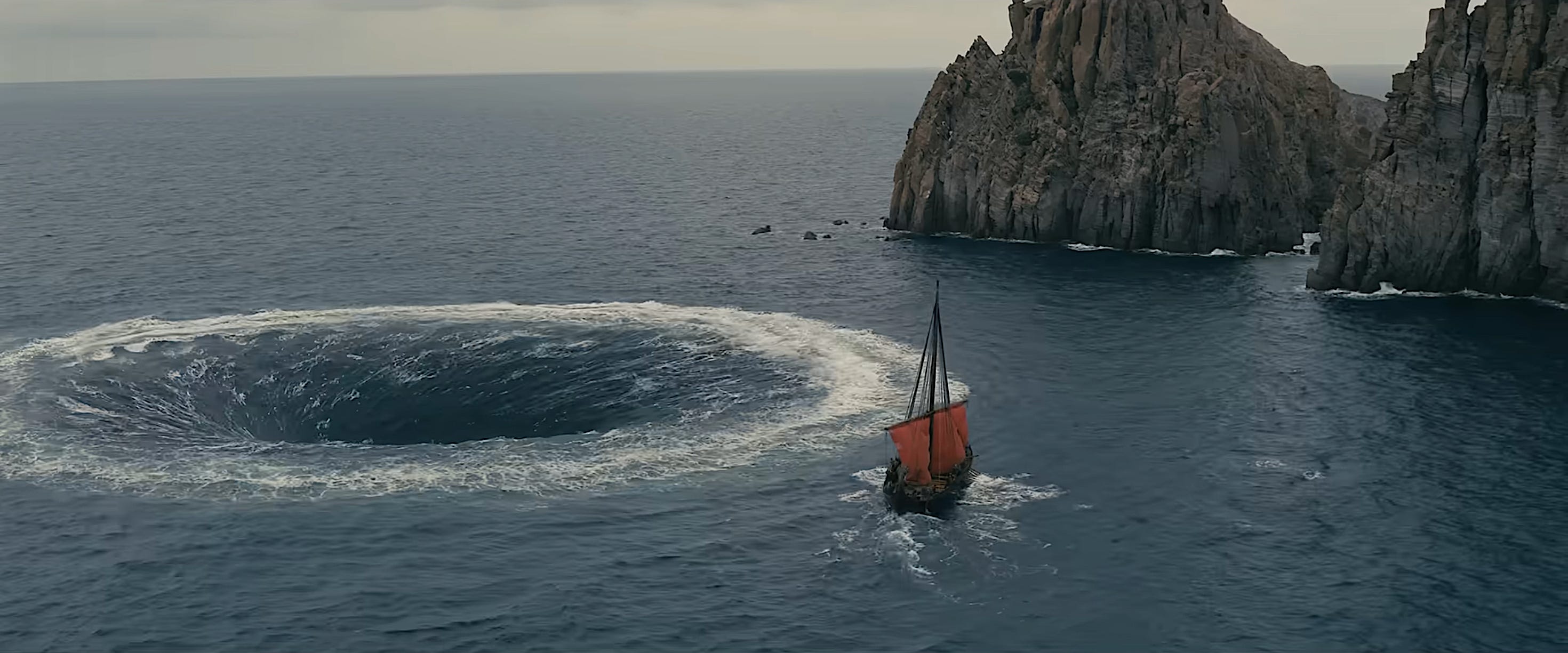
From my essay Celestial Mechanics: Swallowing the Moon (09/2025)
“Charybdis is a map of the North Node in Pisces. The whirlpool pulls whatever sails too close. It consumes and redirects, reshaping the course, creating detours, making surrender the only passage. To meet her is to know that the sea moves with its own direction and that control is a little story we tell ourselves. This is one of the lessons of the North Node in Pisces: hunger that cannot be domesticated, desire that asks us to release the shore and trust the current. What waits for us there? Maybe a love without shore, a love vast enough to unmake and remake us.
The sea is bigger than us. So is the sky. To be taken by them is to come apart. And yet Odysseus passes through. He lives to tell the tale. And so will we.”

Back then, I also wrote about the South Node in Virgo, when we found ourselves at the other end of the sky body, describing that eclipse experience as a septic tank, a body expelling what it could no longer keep.
I love the visual of a digestive system in the sky. One that mimics our own, down here in the land of the mortals. The celestial body and ours participating in the same material mechanics.
Now the nodes have changed signs1 and we are at the beginning of a new story. The Dragon’s Head has moved into Aquarius and the Tail into Leo, where it will remain for the next year, dragging eclipse experiences with it. On August 12 we get our first major encounter with this new terrain: a total solar eclipse in Leo, in the domicile of the Sun, at the evacuating end of the dragon, the south node.
As luck would have it, I recently stumbled upon Georges Bataille’s L’Anus Solaire and I could not stop thinking about the correlations between this text and visions of the south node. In this essay, I attempt to weave the two.
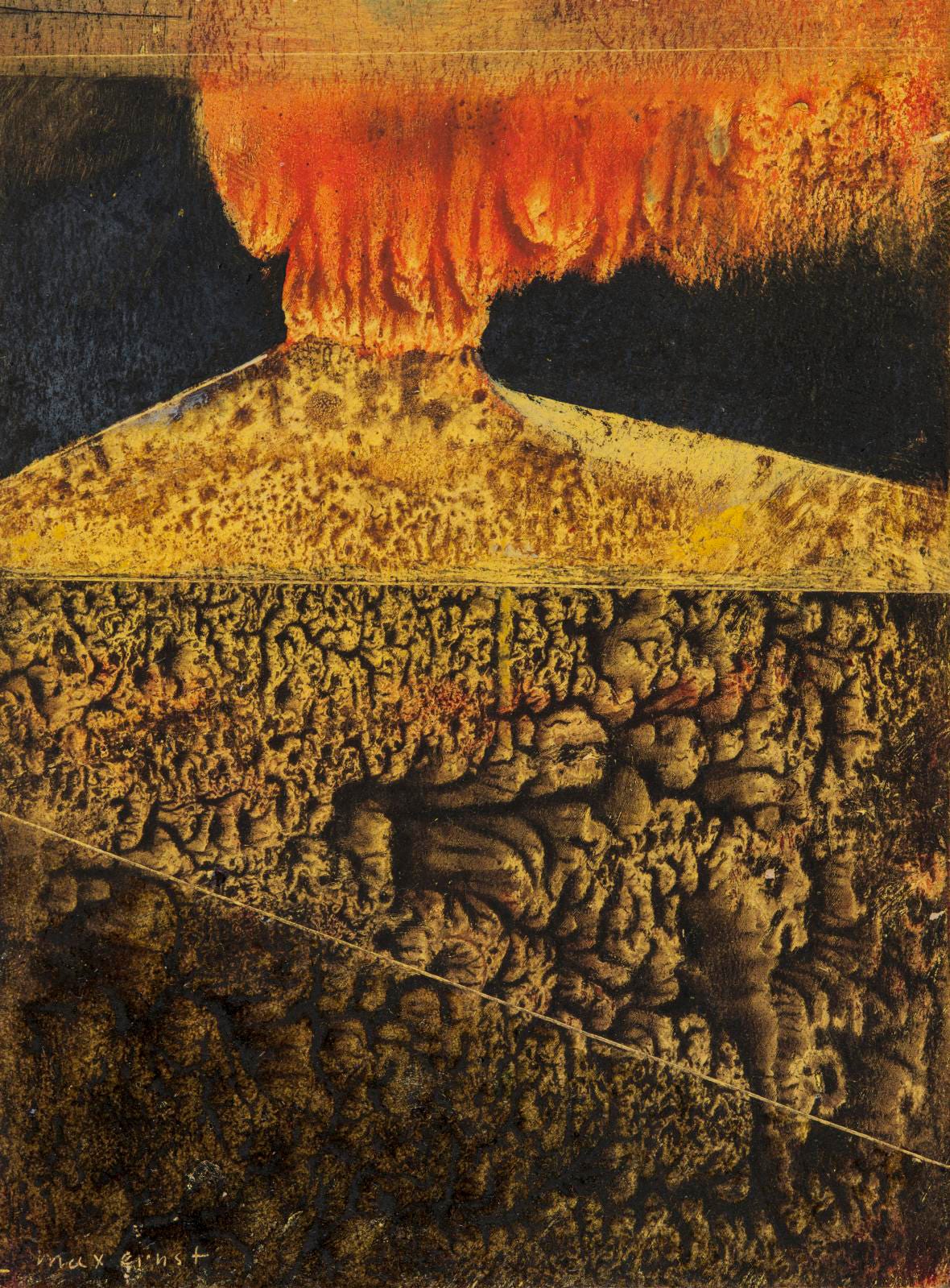
“The terrestrial globe is covered with volcanoes, which serve as its anus,” he writes in The Solar Anus, a very controversial and wonderfully unhinged text written in 1927. “Although this globe eats nothing, it often violently ejects the contents of its entrails.”
Well. Here we are again. Invited to the ejection of entrails. Are we ready?
The lunar nodes have always had bodies. Accross traditions they appear as the Head and Tail of the Dragon, caput draconis and cauda draconis, two invisible points where the paths of the Sun and Moon intersect and eclipses become possible. The Head increases, it consumes, it is hungry. The Tail diminishes, disperses, expels.
In the Vedic tradition, Rahu is a severed head condemned to eternal hunger, swallowing the Sun and Moon whenever it catches them, while Ketu is the headless body left behind. Rahu has a mouth but no body through which to digest what it consumes. Ketu is the body without the consuming head. Their mythologies and astrological traditions are distinct, but I am fascinated by the anatomy they share. I am taking some liberties here, reading this mythological anatomy through my own digestive cosmology rather than presenting it as a traditional interpretation of the nodes.
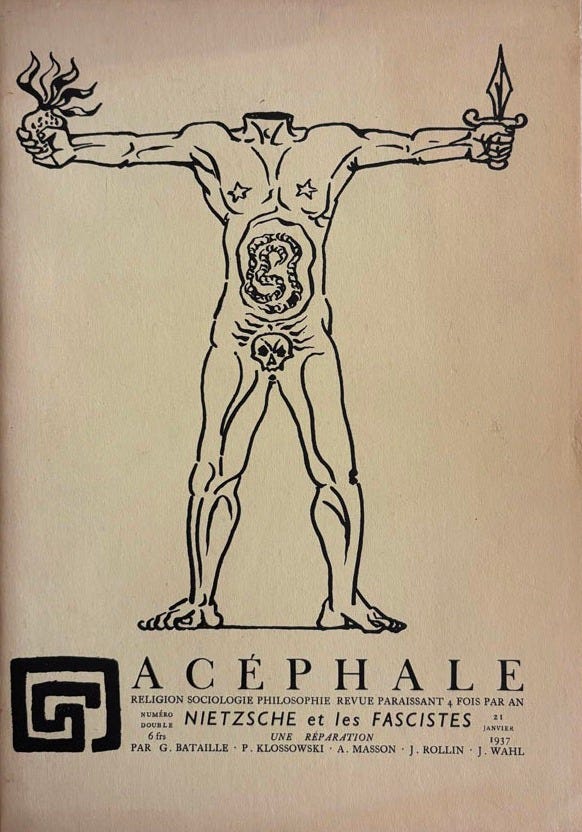
Coincidentally, Bataille also writes about headless bodies in his notion of the “acephalic” figure, where the human form is imagined without a head, released from the hierarchy of reason and sovereign control, but that’s a discussion for another day.
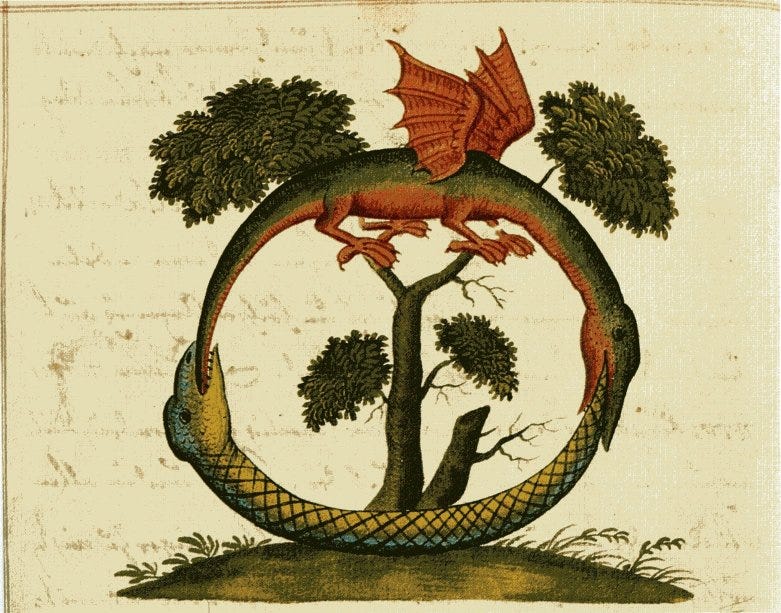
Put the two ends back together and you have a digestive system written across the sky. One end eats, the other shits.
Which makes a South Node eclipse in Leo, the fixed house of the Sun, an unusually good occasion to think about the concept of the solar anus.
Bataille’s universe is a strange place, equally poetic and filthy, full of provocations. Nothing stays fixed for very long. Planets turn, bodies rise and fall.
“Plants rise in the direction of the sun and then collapse in the direction of the ground (…) A man gets up as brusquely as a specter on a coffin and falls in the same way. He gets up a few hours later and then he falls again, and the same thing happens every day; this great coitus with the celestial atmosphere is regulated by the terrestrial rotation around the sun.”
There is no clean division between celestial mechanics and the mechanics of bodies. Bataille looks at the rotation of the Earth and sees fucking. He looks at a volcano and sees an anus. The movements we prefer to call cosmic and those we prefer to keep behind closed doors belong to the same material and entangled world.
This is partly what makes The Solar Anus so funny. Bataille keeps dragging the heavens back into the body, while simultaneously enlarging the body’s most basic functions and apertures until they become cosmic. The high and the low chase each other around the page. The Sun parodies the Earth and the Earth parodies the Sun. A scatological circularity.
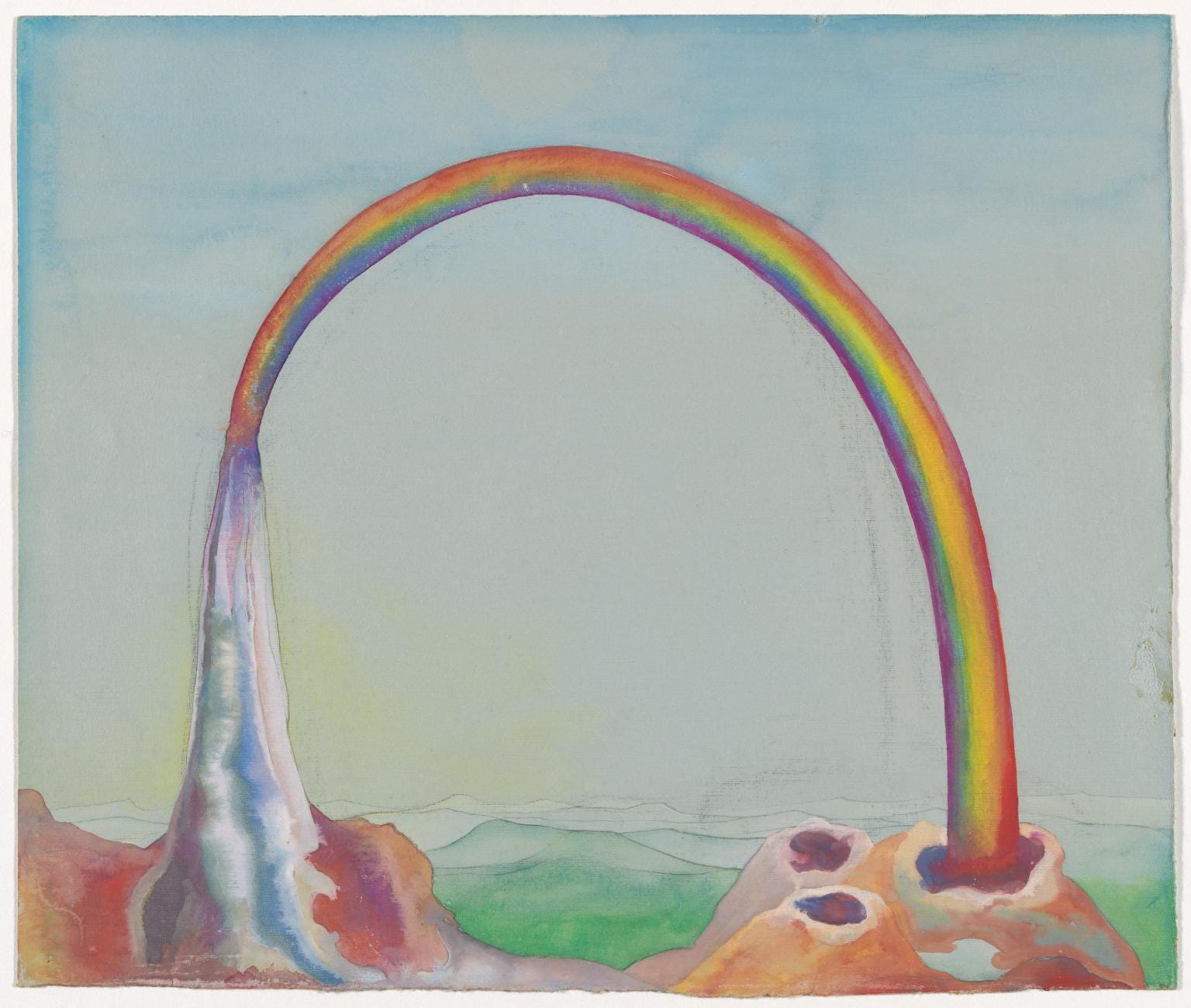
Bataille’s volcanic language is especially good at this. I also have a little volcanic obsession. I think about them in my own work, and often dream about them too.
A volcano interrupts our ordinary experience of the ground as something that is solid or finished. Beneath the surface are magma, gases, enormous pressures and temperatures, a whole subterranean drama... while the landscape above does its best to conceal all this movement. The crust eventually breaks. What belonged to the interior enters the atmosphere and begins moving across the surface. It squirts, it cools, it hardens and eventually it becomes ground again. New landscapes are formed. The anus cannot stay sealed forever. Free the anus.
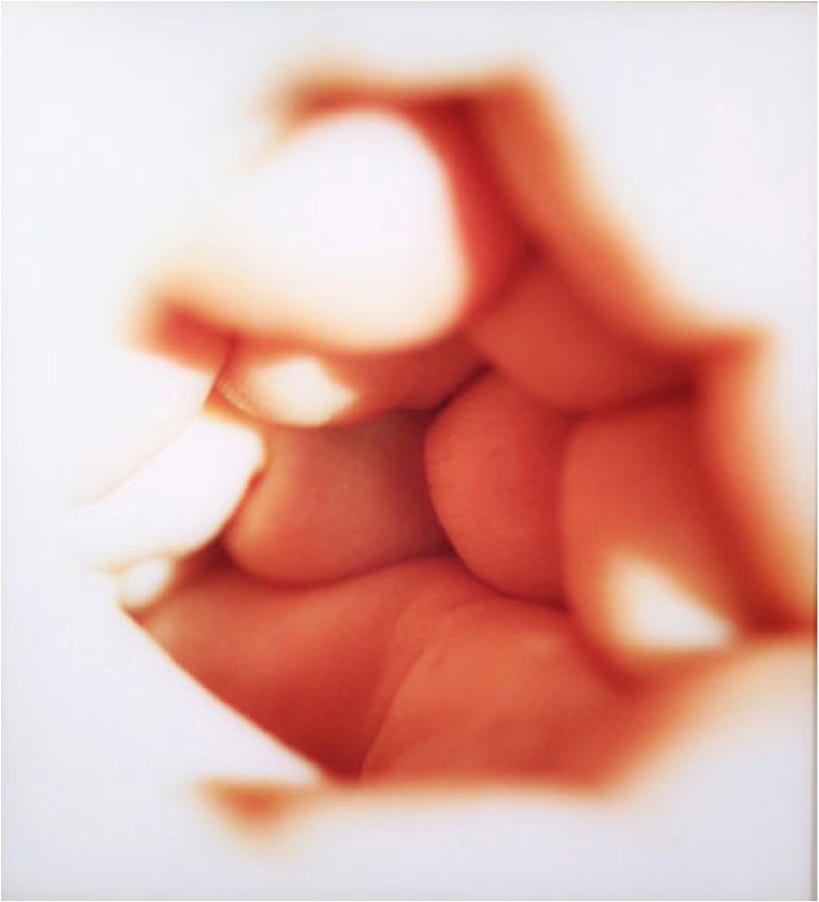
The Earth shits and makes a mountain. She cums and and we all tremble.
Bataille gives this erupting body a name: the JESUVE, an obscene linguistic monster made by smashing Jesus into Vesuvius, Jésus into Vésuve, with je suis, “I am,” somewhere inside it too. Christ meets volcano, salvation meets eruption, the body that ascends toward heaven fused with the mountain that ejects its burning interior toward the sky.
I love this Bataille monster.
There is something Dionysian lurking around its edges too, although Bataille does not say it here. Ecstasy, bodily excess, erotic frenzy, the destruction of boundaries, the sacred encountered through dismemberment: this belongs to an older and much stranger face of the sacred. In Bataille, the sacred does not remain pristine or intact, it appears where ordered boundaries break down. It is orgiastic.
“Love, then, screams in my own throat; I am the Jesuve, the filthy parody of the torrid and blinding sun.”
I am struck by the word parody. The volcano answers the Sun from below. One radiates toward the Earth while the other throws its incandescent interior toward the sky, and the distinction between celestial and terrestrial begins to collapse. The Sun parodies the volcano and the volcano parodies the Sun. Heaven and Earth are grotesque reflections of one another, locked into an exchange of heat, matter, pleasure, violence and ejaculations.
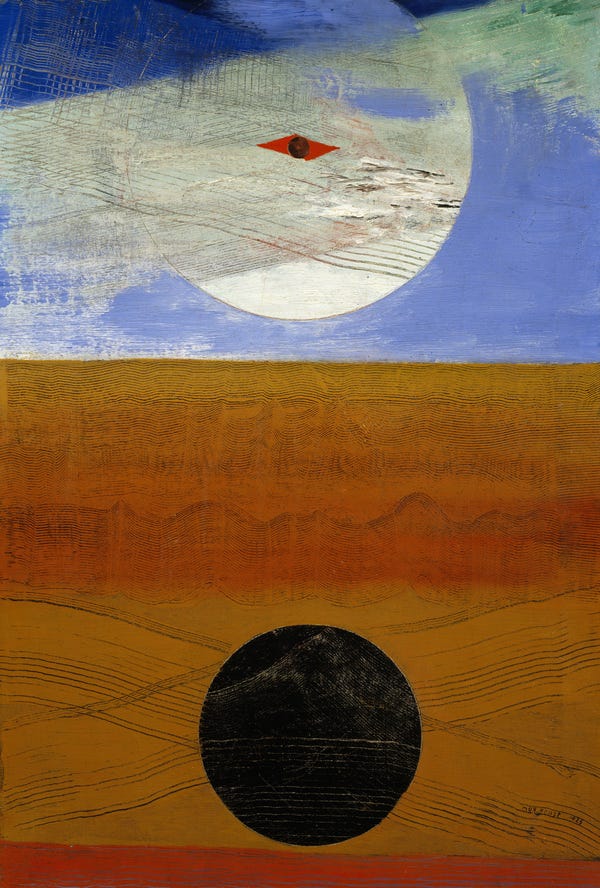
This circulation runs throughout The Solar Anus. Plants rise toward the Sun and then collapse toward the ground. Human beings get up each morning and fall back down again at night. Planets move away from their positions only to return to them. Bataille looks at terrestrial rotation and sees “this great coitus with the celestial atmosphere.” Everything rises, falls, enters, exits, burns, fucks, dies and begins moving again.
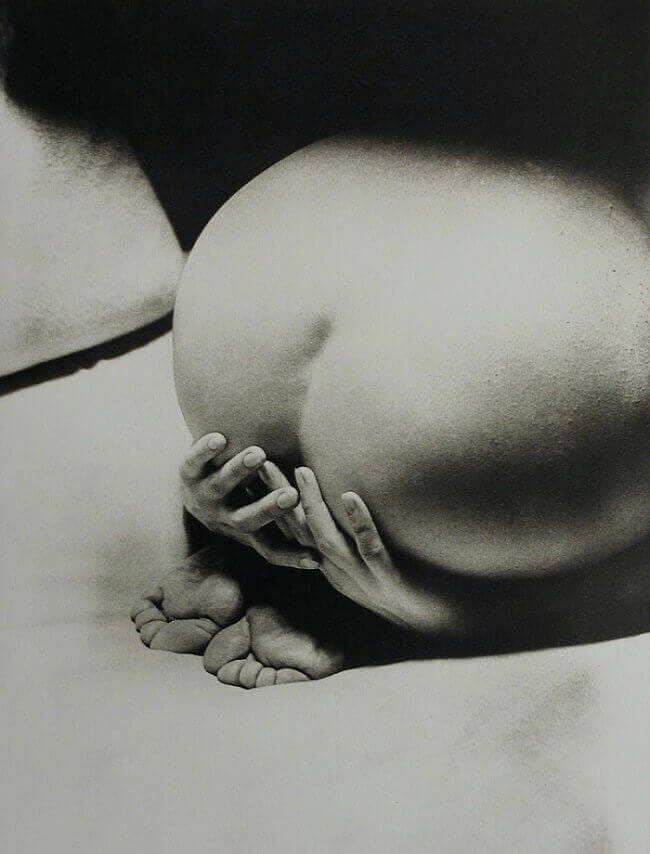
Perhaps this is what makes the anus such a precise organ for Bataille’s universe. It breaks the fantasy of a body that can keep everything it acquires. Bodies have to spend. They sweat, swell, bleed, shit, orgasm, decay. The anus belongs to pleasure and excretion at once, intimacy and disgust, and has a particularly effective way of reminding even the most sovereign body that it is still a body. Again, the anus cannot stay sealed forever. Free the anus.
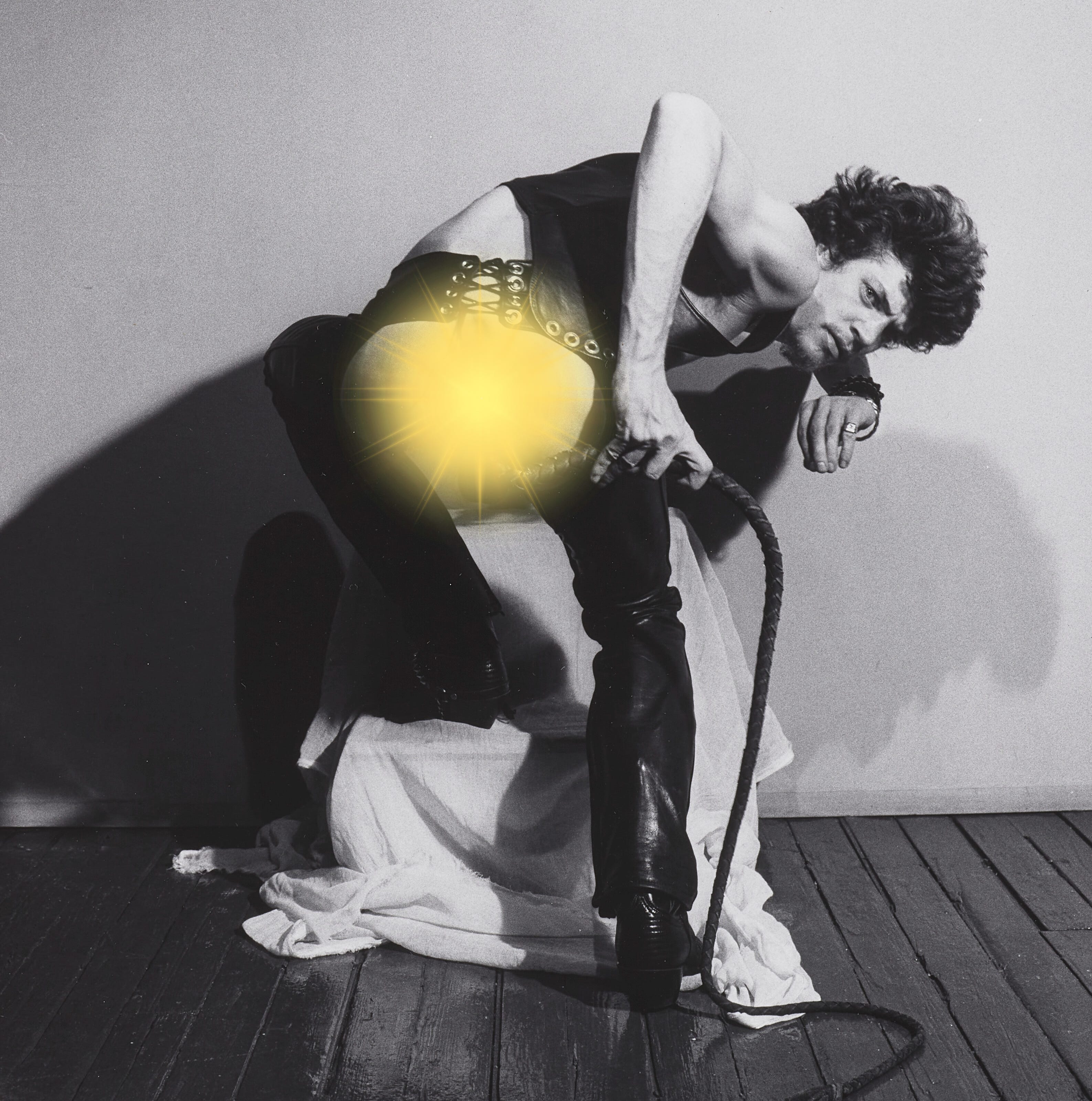
Which returns me to the Dragon’s Tail. A dragon has a digestive tract. What enters at one end eventually has to leave through the other. Does everything that enters violently leave violently?
This August, that evacuating end of the dragon meets the Sun in its own house. The anus is lit up precisely as the Sun is also being darkened.
There is something almost comic about the indignity of it. Leo has an ancient relationship to royalty, sovereignty, authority and the solar principle itself. The king encounters the asshole of the cosmos. I wonder which kings of our time will find their crowns and claims to authority at the mercy of the great asshole of the cosmos this time around?
I know Bataille would have enjoyed the configuration.
There is another thing that happens on August 12. During totality, the corona emerges. The outer atmosphere of the Sun, ordinarily concealed by its own overwhelming brilliance, suddenly appears. We see more because, for a brief interval, we see less.
Eclipses retrain our vision. Altered light allows shapes that were always there to become visible. A total solar eclipse makes this literal. The Sun’s brightness hides part of the Sun. As the Moon moves across its face, the familiar solar disk disappears and something much larger becomes perceptible. The corona extends outward into space in pale streams of plasma, an enormous atmosphere usually erased from our vision by the brilliance at its center. Nothing new has appeared but the conditions of seeing have changed. Only for a bit but long enough.
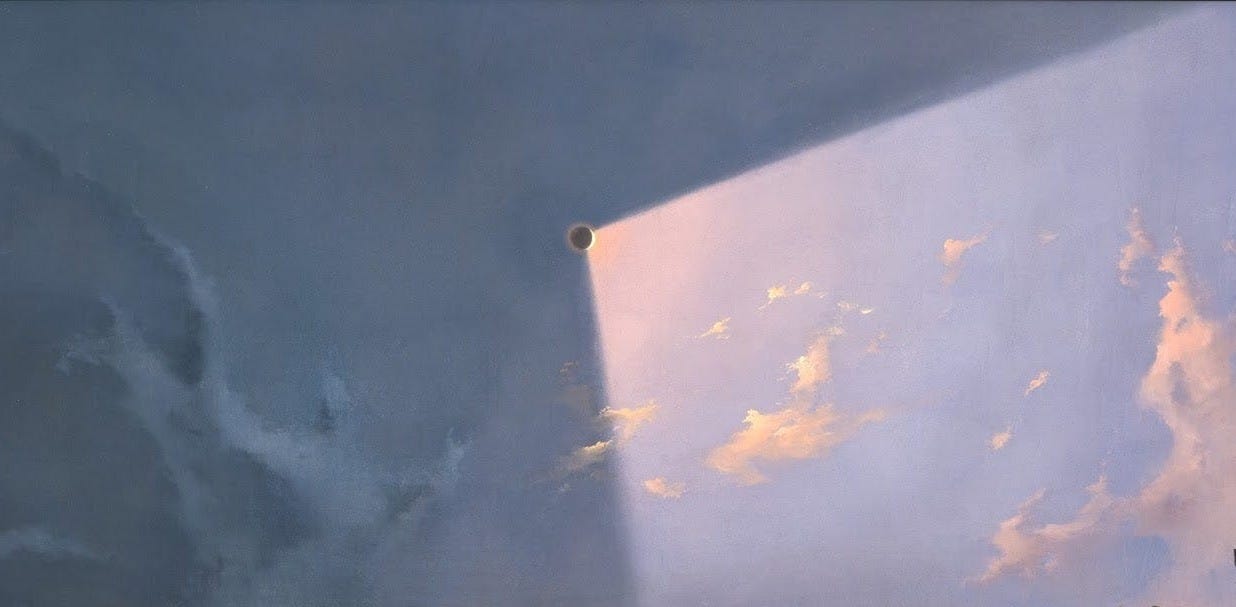
I find this much more compelling than the language of revelation we often attach to eclipses, as though darkness exists merely to uncover some hidden truth about ourselves. A solar eclipse makes no such promises. The world looks different because there is less of something we ordinarily depend upon to see it.
And then there is also the shape of the thing. At totality, the center of the Sun becomes a black disk. Around it, the corona burns outward, luminous and unruly. A dark circular opening surrounded by solar radiance. Corona, crown, circle, ring, annulus.
After several weeks of thinking about Bataille, dragons, volcanoes and the evacuating end of the nodal axis, it has become difficult for me to look at an image of totality without seeing it.
The eclipse itself is the solar anus.
Bataille, of course, got there first. Near the end of his text, after bodies have risen and fallen, volcanoes have erupted and the heavens have been thoroughly contaminated by the Earth, he turns toward the one thing the Sun cannot illuminate:
“The Sun exclusively loves the Night and directs its luminous violence, its ignoble shaft, toward the earth, but it finds itself incapable of reaching the gaze or the night, even though the nocturnal terrestrial expanses head continuously toward the indecency of the solar ray.”
References
Georges Bataille, The Solar Anus (L’Anus solaire), written 1927, published 1931. You can read it in English here.
Guy Hocquenghem, Homosexual Desire (Le Désir homosexuel), 1972.
Notes
Throughout this essay I am using the true lunar nodes, which entered the Leo–Aquarius axis in late July 2026. Many traditional astrologers generally calculate the mean nodes. I am drawing the symbolism of the Dragon’s Head and Tail, and their qualities of increase and decrease, from traditional astrology while using the true nodes for the timing of the ingress.